



When 15-year-old Zac Popik attended a Barack Obama presidential campaign visit at Cuyahoga Community College in 2008, his mom handed him a camera and tasked him with shooting the best picture he could of then Senator Obama. For the rest of the visit, Popik focused all his attention on achieving the perfect shot.
This moment was only the beginning of his journey to fulfill his desire to capture life’s moments.
How Popik’s photography journey began
Popik’s passion for photography began when he was just 12 years old. He grew up with many cameras around his childhood home because his mother used them to document his and his three siblings’ lives.
He recalls that he stole them to take his own pictures.
“My love for photography started with photographing my friends and being a documentarian,” he says.
His college journey began at Mercyhurst University, where he studied criminal justice because he wanted to help others in law enforcement
Popik recalls the irony in the fact that the thing he loves — photos — is also what drove him away from criminal justice. The crime scene photos that he saw in class made the decision to pursue something else clear.
But after seeing those photos, he decided that this wasn’t right for him, and that decision was the beginning of his journey to pursue what he really wanted to do: photography.
“I have always been a photographer. I would drive away from campus with my iPhone 4 and take whatever pictures I could,” Popik says.
He later decided to attend Kent State University to pursue a photojournalism degree, where he became eager to get as much experience as possible and build his portfolio. He took stills for student films, participated in Student Media and reached out to photojournalism professor Dave Foster, who became a vital part of Popik’s educational and career journey.
Popik recalls originally contacting Foster and telling him he wanted “to transition away from photojournalism and focus on set stills.” He was originally pursuing a degree in photojournalism to do storytelling, but he felt as though he was better at documenting things from a distance.
“Foster used to tell us that there is a photograph in everything — you just have to find it. And I liked the idea of weeding through what life is giving me and finding the art,” Popik says.
Together, Foster and Popik developed a plan to help him achieve his goal. They met often in Foster’s office, which they both recall as times they were very fond of.
“I would have four or five people in my office, including Zac; he was like a social glue because of his personality,” Foster says.
Lydia Taylor, Popik’s close friend from college, also remembers spending time with Popik in that office.
“We talked to Dave about anything and everything,” Taylor says.
As a part of this plan, Foster suggested Popik speak to someone in the still photography field. Popik chose Jake Giles Netter, a still photographer based in Nashville and L.A.
Popik remembers conversing with the photographer for hours.
“I asked him every question I had, and at the end of the call, he asked me if I still wanted to follow this path, and I said, ‘Yes, this is it for me,’” Popik says.
Foster and Popik would discuss his work and brainstorm together during their meetings.
“I would take the stills I took from the short films and sit down with Dave and ask how I can use them to create a portfolio and sell myself as a still photographer, which kind of began me climbing that career path,” Popik says.
According to Foster, there is an element of competition within the photography field, but he says that Popik “was always someone who got just as excited about other people’s work as he would his own.”
Popik’s professional career
“I could sense early on that whatever he did, he would do well because of how much he cares. The world doesn’t need more photographers, but it’s up to you to fit yourself in, and he was ambitious to make a place for himself,” Foster says.
After graduation, Popik focused on building his career portfolio, and he started by doing free work because he “just wanted to get on sets.” He said many films require you to be a union member to work on them.
“I would try and get on any non-union commercial, music video or anything that was a set to develop a portfolio for my professional career,” he says. Once Popik became a part of a union, he began receiving calls for Netflix films and other large-scale productions.
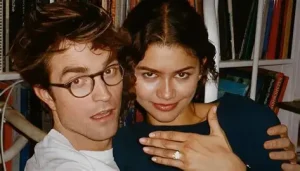
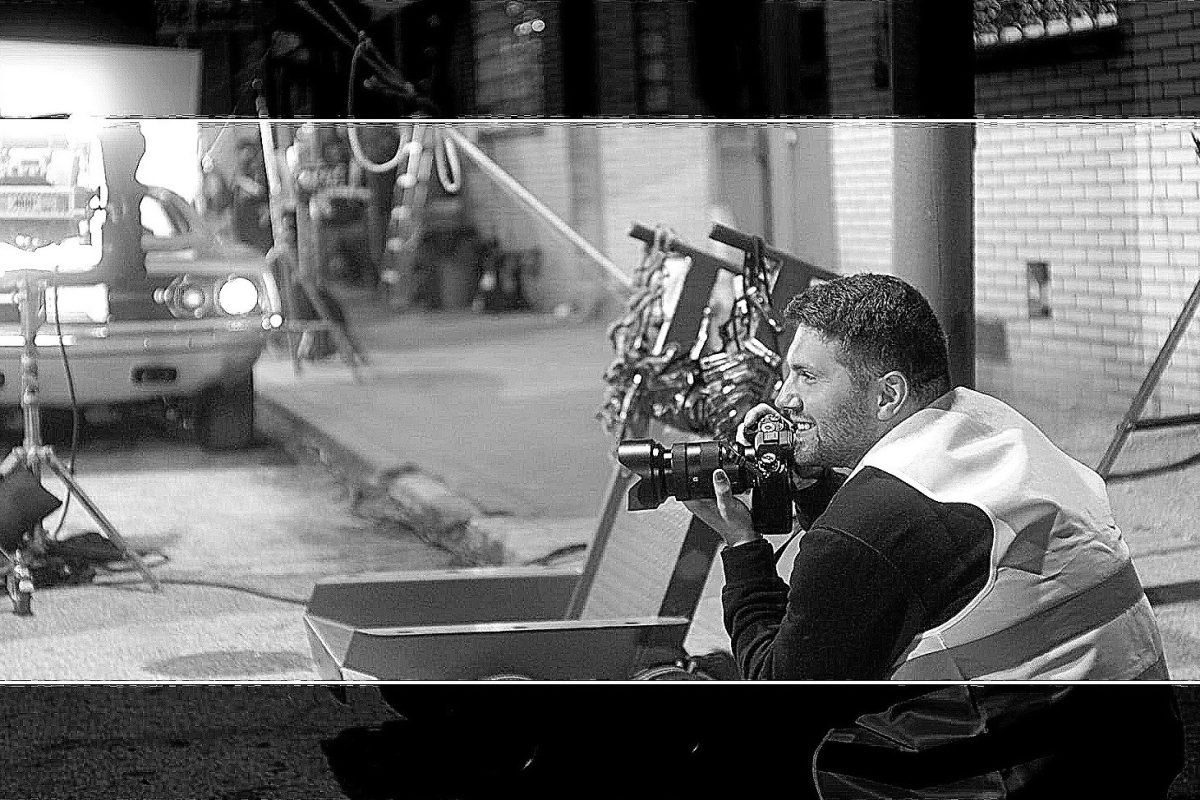
From then on Popik worked for various companies, such as The Walt Disney Studios, Sony Pictures Entertainment, Warner Bros., Peacock Entertainment and more. Some of the productions he has worked on are “Eenie Meanie,” season three of “Will Trent” and “Miller’s Girl,” starring Jenna Ortega and Martin Freeman.
“I had a lot of fun working on “Will Trent,” he says. “It was my first time working with a network. I enjoyed working on set and working with the cast — they were fantastic.”
“Eenie Meanie,” filmed in Cleveland, Ohio, was one of Popik’s favorite films to work on due to the environment and the people he worked with.
“It was like being paid to be at summer camp; we had so much fun. There were tough days, but [they were] some of the best friends you will ever meet are on a film set,” he says.
“I can see that being social has helped him get where he is in his career. He connects with people,” Foster says.
Along with building strong connections with people he works with, Popik is dedicated to creating quality work.
“Whenever he attacks a project, he gives it his all,” Taylor says.
His days sometimes last 10 to 14 hours, but Popik considers being on set as “the coolest thing in the world.”
Popik’s passion for photography pairs well with his passion for people, and he uses his social skills to connect with others in his field.
“As a photographer, I don’t think you will see the impact right away, or truly see that change, and if you do, God bless you. My impact as a photographer is supporting others through photography, and I think that base would be photojournalism and storytelling,” Popik says.
Despite the significant growth in Popik’s career, he values helping others in various stages of professional photography.
“My idea of helping people has changed through becoming a still photographer,” Popik says. I’m not sure my photos help people, but how I interact with my community helps people. I love building community.”
Joi Sims is a web writer. Contact her at [email protected].