







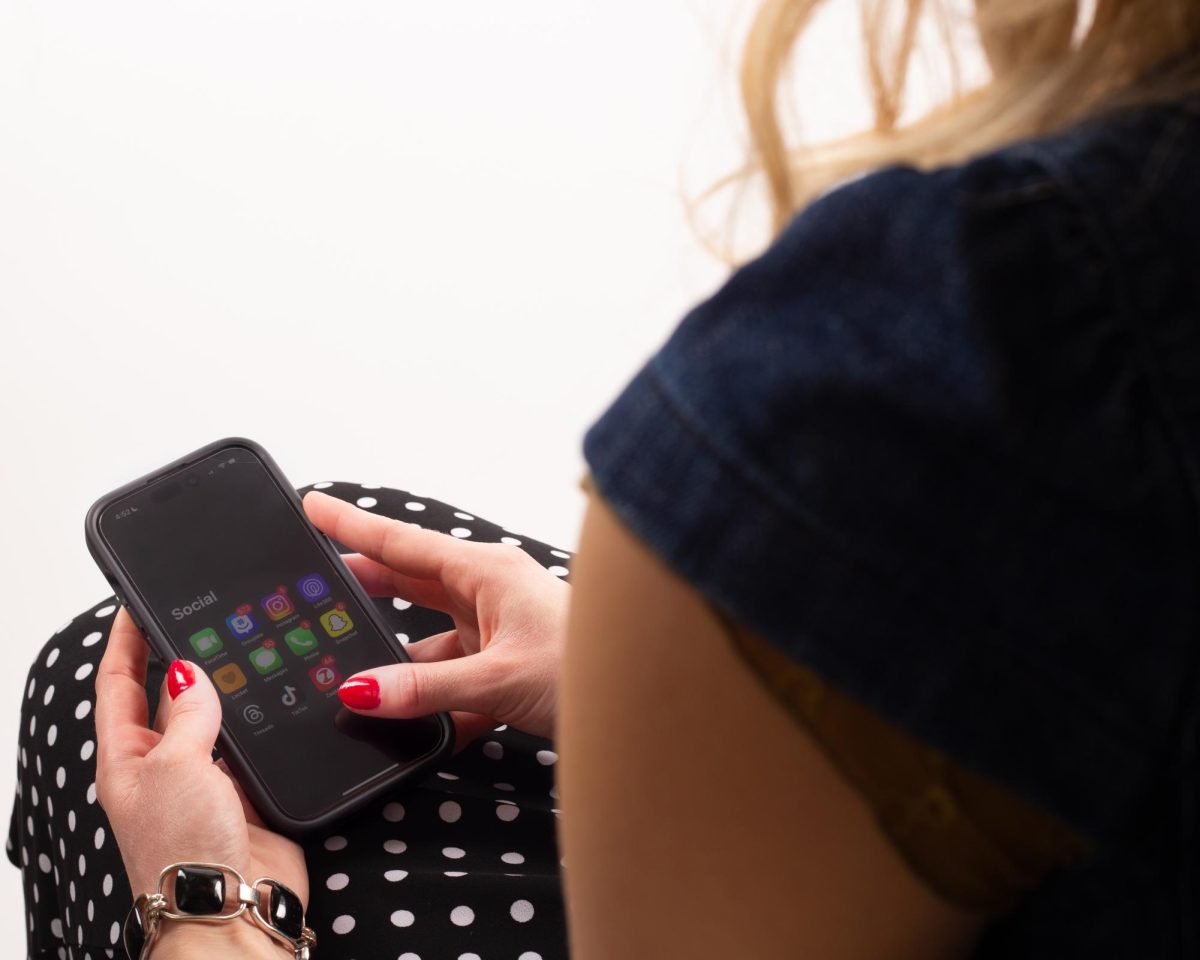
Breaking news no longer comes from television screens or front pages. It flashes across phones in the middle of a lecture, a late-night scroll or a study break. For many Kent State students, the first headline they see isn’t from The New York Times or CNN, it’s from social media.
In feeds filled with trending sounds, controversial opinions and AI-edited clips, separating fact from fiction has become its own challenge. As misinformation continues to spread online, students are learning that staying informed means more than just staying connected.
“Usually, things will come up on TikTok,” says Sydney Novotny, a sophomore public health major. “Then I go and fact-check it at different sources. I’ll look up news sites online and make sure the information aligns.”
Novotny’s approach reflects a growing awareness among young people that viral doesn’t always mean verified. According to a 2024 Pew Research study, nearly half of Americans under 30 regularly get their news from TikTok. While the app offers immediacy and accessibility, it also blurs the line between credible reporting and commentary.
For Haylie Shoens, a sophomore nursing major, keeping up with current events often comes second to coursework.
“With nursing, I don’t really have time to check news sources,” Shoens says. “I usually find out through TikTok, but if something really catches my attention, I’ll look it up on a couple different platforms, usually one Democratic and one Republican, to see both sides.”
That instinct to compare perspectives is exactly what experts say helps prevent misinformation from taking hold. Tammy Voelker, a humanities subject librarian at Kent State, says the first step is building a “healthy level of skepticism.”
“One of the most useful strategies is something called lateral reading,” Voelker says. “Stop, check other sources for the same thing. See if it’s being reported elsewhere and by whom.”
Voelker also warns that emotion is often a red flag.
“If something seems designed to enrage or alarm rather than inform, pause,” she says. “That’s a tactic often used in misinformation to get you to react before you reflect.”
She recommends using trusted fact-checking tools such as Snopes, FactCheck.org and AP Fact Check, as well as the Kent State Library’s newspaper databases, which provide free access to credible local and national outlets.
For Ava Hook, a sophomore public health major, verifying information is a mix of instinct and effort.
“I get my news from TikTok or Instagram,” Hook says. “To check if it’s real, I usually look it up through major news outlets or research articles.”
Media literacy, the ability to evaluate information critically, — is no longer a niche skill. It’s a survival tool in the digital age.
Algorithms often tailor what we see to what we already believe, creating echo chambers that can reinforce misinformation. However, by questioning sources, cross-checking facts and pausing before sharing, students can help stop falsehoods from spreading.
“It’s work to double-check your sources,” Voelker says. “It’s important work.”
Alexis Hood is a writer. You can reach her at [email protected]