










A blanket of fatigue falls over you when you first wake up, your head pounds with pulsating sinus pressure and there’s a specific ache in the back of your throat — you know this means you’ll be confined to your bed for the next several days.
If you are familiar with any of these symptoms, you, along with hundreds of fellow college students, have fallen victim to the infamous flu season.
As of Feb. 28, 2026, according to an interactive map of the weekly influenza surveillance report posted by the Centers for Disease Control (CDC), the Ohio rate for influenza cases is considered high. The population areas of Cleveland-Elyria, Youngstown-Warren and Akron have highly reported levels of influenza cases.
According to the CDC, influenza and COVID-19 are both highly infectious and share many of the same symptoms, making it impossible to tell the difference without proper testing.
Measles cases and outbreaks also have been on the rise according to the CDC, and the 2026 measles outbreak is on track to be worse than the outbreak that occurred in 2025.
While influenza trends tracked by the CDC show signs of slowing down at the end of February, the risk for getting ill around this time of year is still something to be noted.
Whether it’s through a COVID scare in a dorm floor’s GroupMe, a suspicious cough behind you in your lecture hall or even a sniffle someone insists is merely allergies, as a college student, you have likely noticed the spread of illnesses around you.
So, are college students more susceptible to getting sick? According to Amanda Bretzin, the Health Promotion and Assessment Specialist at DeWeese Health Center, the answer is yes.
“Shared living spaces (residence halls) and frequent social interactions and gatherings with peers make students more susceptible to spreading the flu,” Bretzin explains. “Oftentimes, college students aren’t getting enough sleep, have a lot of stress and are not eating the most nutritious foods, which can all impact their immune system.”
When asked about what college students can do to prevent getting sick, Bretzin emphasizes the importance of students washing their hands, disinfecting high-touch surfaces, avoiding close contact with those who are sick and practicing healthy habits. These habits include getting a proper amount of sleep, staying hydrated, managing stress, eating a nutritious diet and staying physically active. Bretzin also recommends getting the flu vaccine each year, since it can prevent illness.

According to one 2023 study published by the Journal of American College Health, despite influenza rates amongst college students being as high as 73%, only 39% of college students get the yearly flu vaccine.
“I wish more students knew the importance of getting their yearly flu shot,” Bretzin says. “I would also like students to know that it is a myth that the flu shot can make you sick. The virus in the flu shot is an inactivated (dead) virus.”
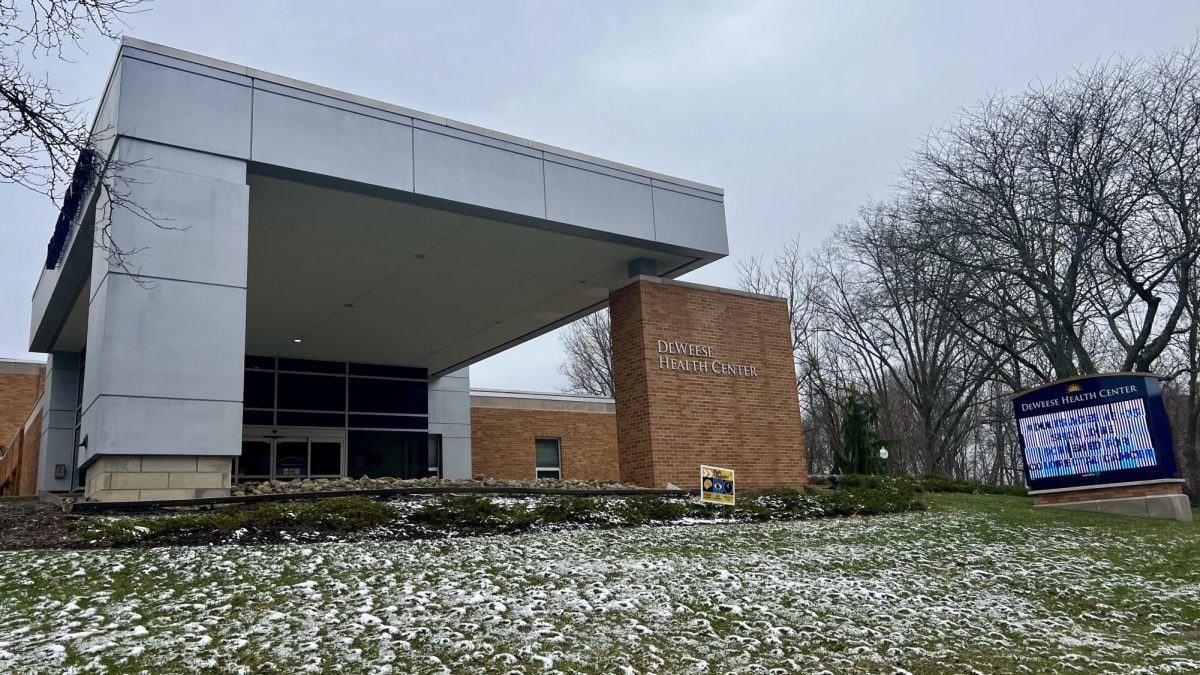
Brezin also wishes to highlight the importance of the DeWeese Health Center as an on-campus resource that can help students when they are feeling sick.
“DeWeese Health Center is here to help our students with their health needs,” Brezin says. “If you are sick and need to be seen by a medical provider, if you are looking for somewhere to get your yearly flu vaccine or if you need an over-the-counter medication to help treat your symptoms, DeWeese Health Center can help you.”
The DeWeese Health Center is open Monday through Thursday from 8 a.m. to 5 p.m., and on Fridays from 9:30 a.m. to 5 p.m. If students would like to schedule an appointment, they can schedule online through the patient portal, make a call to 330-672-2322, or check out the DeWeese Health Center website for more information.
Rebekah Hiles is a writer and photographer. Contact her at [email protected]